
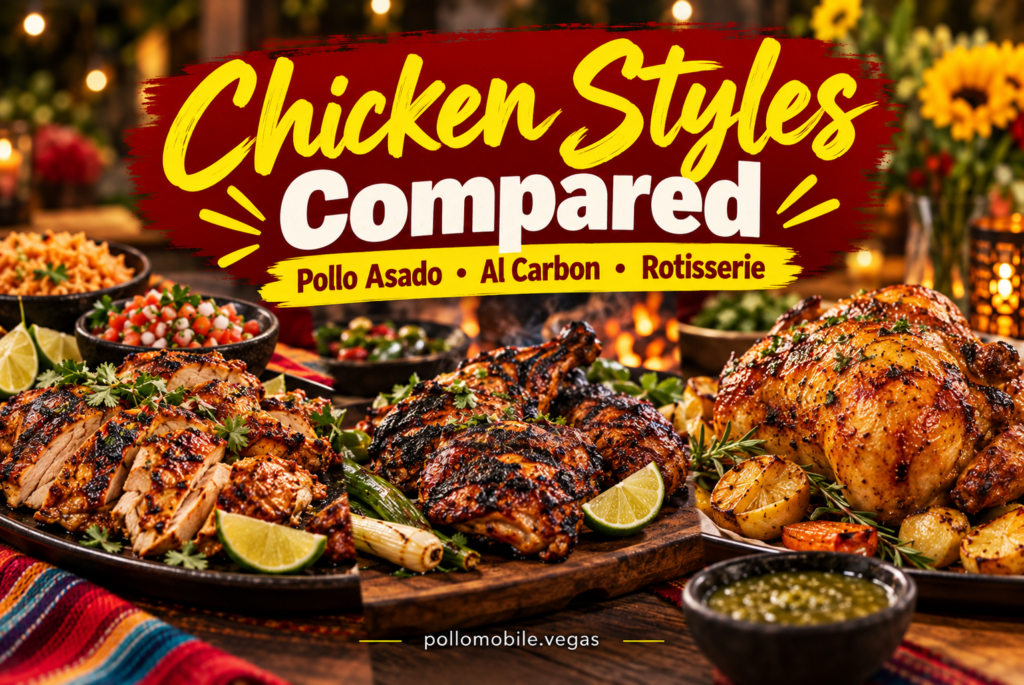
Pollo asado, pollo al carbon, and rotisserie chicken may all start with the same basic ingredient, but the cooking methods can create noticeably different flavors, textures, aromas, and eating experiences.
The simplest distinction is this: pollo asado is a broad term for roasted or grilled chicken; pollo al carbon specifically emphasizes chicken cooked over charcoal; and rotisserie chicken is cooked while continuously rotating on a spit. Pollo Mobile specializes in Mexican-style charbroiled chicken and describes its signature preparation as pollo asado al carbon.
Quick Comparison: Pollo Asado vs. Pollo al Carbon vs. Rotisserie Chicken
| Chicken Style | Primary Cooking Method | Typical Flavor | Exterior | Best For |
| Pollo Asado | Grilled or roasted | Seasoned, savory, often citrusy | Browned or lightly charred | Mexican meals, tacos, family plates |
| Pollo al Carbon | Cooked over charcoal | Smoky, fire-grilled, bold | Distinct char and caramelization | Charcoal-grilled chicken lovers |
| Rotisserie Chicken | Rotated slowly on a spit | Roasted, savory, mild to heavily seasoned | Evenly browned skin | Convenient whole-chicken meals |
The key difference in one sentence
Pollo asado describes a style of cooked or grilled chicken, pollo al carbon identifies charcoal as the heat source, and rotisserie describes the rotating cooking technique.
Because of this, a chicken can technically be both pollo asado and pollo al carbon at the same time, which is why you may see the phrase pollo asado al carbon on Mexican restaurant menus.
What Is Pollo Asado?
Pollo asado translates broadly to roasted or grilled chicken, but in Mexican and Latin American food culture, the term often refers to seasoned chicken cooked over high heat until the exterior develops browning and char.
There is no single universal pollo asado recipe. Depending on the region, restaurant, or family recipe, the chicken may be seasoned or marinated with ingredients such as citrus juice, garlic, chiles, black pepper, herbs, spices, and salt.
The chicken may then be cooked over a grill, open flame, charcoal, or another high-heat cooking surface. That flexibility is important. Pollo asado is more of a broad preparation style than one rigid cooking technique.
What does pollo asado taste like?
A typical Mexican pollo asado may offer:
- Savory seasoning
- Citrus brightness
- Light smokiness
- Caramelized edges
- Grilled flavor
- Juicy interior meat
When the chicken is cooked over charcoal, those characteristics can become even more pronounced.
What Is Pollo al Carbon?
The phrase tells you something specific that pollo asado alone does not: the source of heat.
Charcoal grilling can expose the chicken to intense radiant heat while smoke and combustion contribute to the aroma and exterior flavor. Fat and marinade dripping toward hot charcoal can also contribute to the characteristic grilled aroma associated with live-fire cooking.
The result is often:
- A smoky aroma
- Darker grilled marks
- Charred edges
- A deeply browned exterior
- Stronger fire-grilled flavor
This is why people searching for charbroiled chicken in Las Vegas may prefer pollo al carbon over chicken prepared primarily in a conventional oven.
Is pollo al carbon always pollo asado?
In everyday menu language, there is considerable overlap.
Chicken cooked over charcoal can reasonably be described as pollo asado, while al carbon gives the customer additional information about how it was cooked.
Think of it this way:
- Pollo asado = the broader category.
- Pollo al carbon = a more specific charcoal-cooked version.
That is why pollo asado al carbon is not a contradiction. It is a more descriptive name for charcoal-grilled chicken.
What Is Rotisserie Chicken?
Rotisserie chicken is defined primarily by the equipment and movement used during cooking.
The chicken is secured on a spit and continuously rotated beside or around a heat source. This rotation helps expose different parts of the bird to heat while its rendered juices and fat move across the surface during cooking.
Unlike pollo al carbon, the term rotisserie does not tell you that charcoal was used.
The heat source could be:
- Gas
- Electricity
- Infrared heat
- Wood
- Charcoal
In American grocery stores, rotisserie chicken is commonly associated with convenient, ready-to-eat whole chickens cooked in commercial rotating ovens.
What does rotisserie chicken taste like?
Rotisserie chicken generally has:
- Even browning
- Tender interior meat
- A roasted flavor
- Seasoning concentrated on the skin
- Less pronounced charcoal flavor when cooked with gas or electricity
The exact flavor still depends on the seasoning, brine, temperature, and heat source.
Which Has the Smokiest Flavor?
For people who want a strong smoky grilled chicken experience, pollo al carbon generally has the clearest advantage because charcoal is part of the cooking definition.
A typical flavor spectrum might look like this:
- Most smoky: Pollo al carbon
- Moderately smoky: Pollo asado cooked over a grill or flame
- More roasted than smoky: Gas- or electric-cooked rotisserie chicken
However, the categories can overlap. A rotisserie powered by charcoal can produce smoky chicken, while pollo asado cooked on a gas grill may have less smoke flavor.
Which Chicken Has the Best Texture?
There is no universal winner because texture depends on technique and personal preference.
Choose pollo asado if you like:
• Grilled surfaces
• Caramelized seasoning
• Slightly crisp edges
• Marinade-driven flavor
Choose pollo al carbon if you like:
• Charred edges
• Fire-kissed skin
• Smoky exterior flavor
• Contrast between grilled outside and juicy inside
Choose rotisserie chicken if you like:
• Consistent cooking
• Evenly browned skin
• Traditional roasted texture
• Easily shredded meat
For tacos, family-style Mexican meals, and plates served with tortillas and salsa, the bold exterior flavor of Mexican grilled chicken can be especially appealing.
Is Pollo Asado the Same as Grilled Chicken?
Not exactly.
All pollo asado can broadly be described as grilled or roasted chicken, but not every grilled chicken recipe would traditionally be called Mexican-style pollo asado.
The difference often comes down to seasoning, marinade, cultural preparation, cooking technique, and how the chicken is served.
A plain chicken breast placed on a grill is technically grilled chicken. Pollo asado, however, generally implies a seasoned preparation associated with Mexican or Latin American cooking traditions.
Which Is Better for Tacos?
Pollo asado and pollo al carbon are particularly well suited for tacos because the grilled flavor can stand up to tortillas, salsa, onions, cilantro, lime, and other toppings.
The charred portions provide contrast, while the seasoned interior adds flavor without requiring a heavy sauce.
Rotisserie chicken can also be shredded for tacos, but it generally creates a different experience. It is often softer and more roast-like unless additional seasoning and grilling are added after shredding.
Which Is Better for a Family Meal?
Choose pollo asado for:
A flavorful Mexican meal served with tortillas, salsa, rice, beans, and traditional sides.
Choose pollo al carbon for:
A family that loves smoky, freshly grilled chicken and charred flavors.
Choose rotisserie chicken for:
A convenient ready-to-eat meal or chicken that will be shredded and used in several different recipes.
Does One Cooking Method Make Chicken Healthier?
The cooking method alone does not determine whether a chicken meal is healthier.
The final nutritional profile can also depend on portion size, whether you eat the skin, marinade ingredients, added salt, sauces, side dishes, and amount of added oil.
It is better to evaluate the complete meal than assume one cooking method is automatically healthier.
Common Mistakes When Comparing These Chicken Styles
Assuming pollo asado and pollo al carbon are completely different dishes
They overlap. Pollo al carbon can be a specific type of pollo asado.
Assuming all pollo asado is charcoal grilled
It is not. The term does not always specify the fuel source.
Assuming all rotisserie chicken tastes the same
Seasonings and heat sources vary significantly.
Confusing pollo al carbon with heavily sauced barbecue chicken
Charcoal cooking describes the heat source. It does not require sweet American-style barbecue sauce.
Choosing based only on the name
Ask how the restaurant actually cooks the chicken. Cooking technique often tells you more about the flavor than the menu label alone.
Which One Should You Choose?
Want bold smoke and char? Choose pollo al carbon.
Want Mexican-style seasoned grilled chicken? Choose pollo asado.
Want evenly roasted whole chicken and convenience? Choose rotisserie chicken.
Want both Mexican seasoning and charcoal-grilled flavor? Look for pollo asado al carbon.
That final combination is the style Pollo Mobile highlights as part of its Mexican-style charbroiled chicken offering in Las Vegas.
Final Takeaway
The biggest difference between pollo asado vs. pollo al carbon vs. rotisserie chicken comes down to what each name describes.
Pollo asado is the broadest term and generally refers to seasoned roasted or grilled chicken. Pollo al carbon specifically tells you the chicken is prepared using charcoal, which can create a smokier, more charred flavor. Rotisserie chicken is defined by rotating the bird on a spit as it cooks.
For diners who want Mexican-style seasoning combined with bold fire-grilled flavor, pollo asado al carbon brings the two concepts together.
Pollo Mobile serves Mexican-style charbroiled chicken in Las Vegas, along with tacos and family-style options. For anyone comparing a standard rotisserie bird with freshly grilled Mexican chicken, the real difference is best experienced in the smoke, char, seasoning, and cooking technique.
Frequently Asked Questions
Pollo asado generally means roasted or grilled chicken. On Mexican menus, it commonly describes seasoned chicken prepared using high-heat grilling or fire-roasting techniques.
Al carbon indicates that food is cooked using charcoal, giving diners more information about the heat source and expected grilled character.
Not necessarily. Charcoal determines the cooking method, not the spice level. Heat depends on the marinade and seasonings.
Yes. Rotisserie describes the rotating spit technique rather than a specific fuel source.
Cooking over charcoal can create smoke, strong browning, and charred surfaces that produce a different aroma and flavor from many oven-based methods.
The terms can overlap when chicken is grilled using charcoal or a similar live-fire method, although restaurants may use "charbroiled" more broadly depending on their equipment.
Yes. Pollo asado tacos are a popular way to serve seasoned grilled chicken with tortillas and traditional toppings.
Common pairings include tortillas, Mexican rice, beans, salsa, onions, cilantro, lime, and guacamole.
It can be prepared as a whole chicken or in individual pieces. The exact preparation varies by restaurant and regional tradition.
Continuous rotation promotes relatively even exposure to heat, while whole-bird cooking helps retain moisture when properly prepared.
For Mexican-themed parties and family-style events, pollo asado al carbon works particularly well alongside tacos, rice, beans, salsa, and other shareable dishes.
Pollo Mobile specializes in Mexican-style pollo asado, charbroiled chicken, and tacos in Las Vegas.